
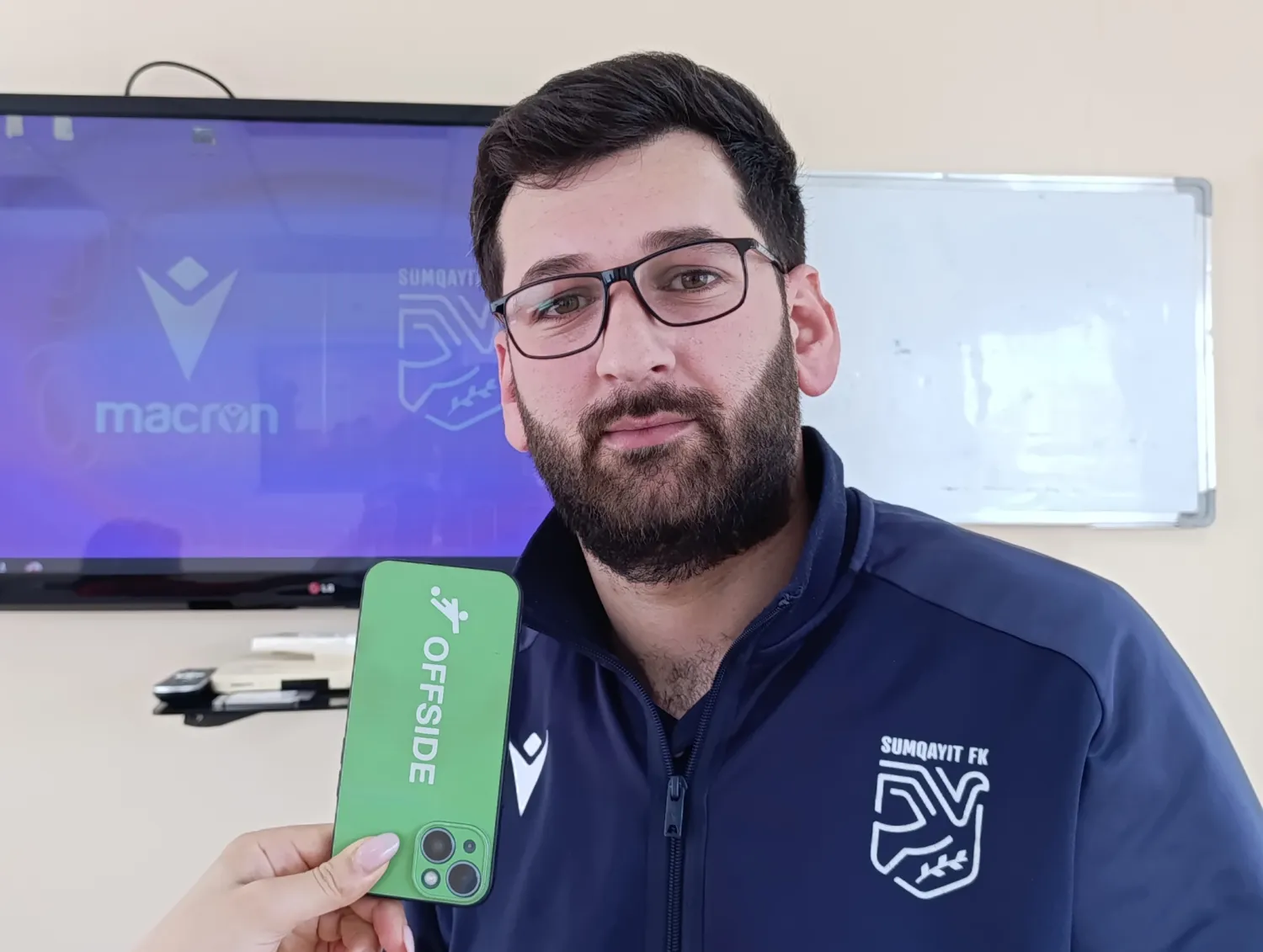
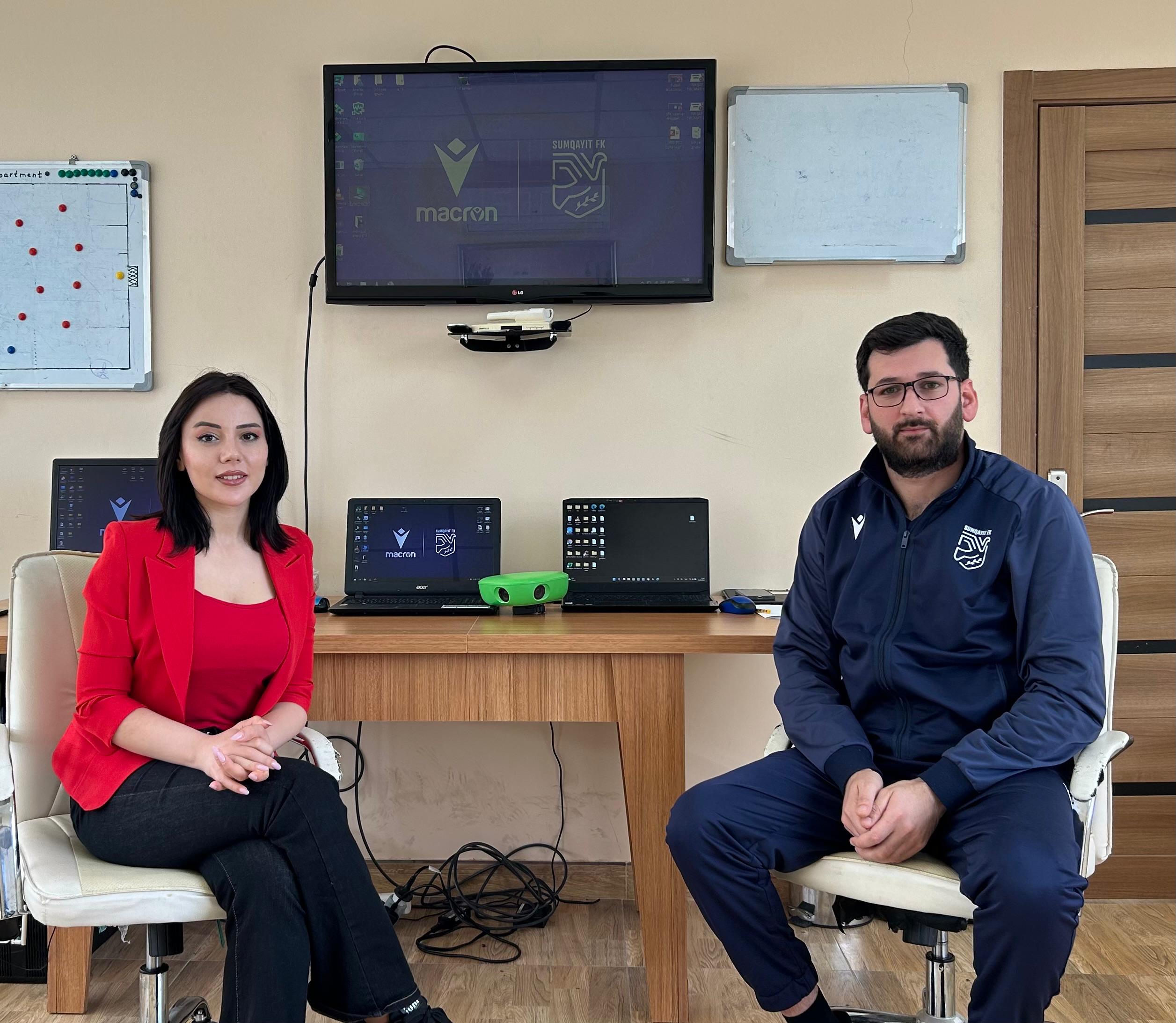
Interview with Nurlan Farhad, Analyst and Video Analysis Specialist at Sumgait Football Academy, for Offsideplus.az.
Last month, a cooperation agreement was signed between AFFA and the "Eyeball" company. Given the direct impact of this new partnership on your work, I would like to start our conversation from there.
-
The "Eyeball" company’s camera and analysis platform will now be implemented in Azerbaijani football. The Sumgait Football Academy is also part of this project. Within the framework of the project, matches will be filmed using "Veo" cameras, which have already been ordered by AFFA. From now on, the filming of matches will be organized directly by the federation. Once the matches are recorded, analysts will upload the footage to the "Eyeball" platform, where extensive data analysis will be provided. These analyses will cover statistical indicators such as a player's number of ball touches, total number and accuracy of passes, shots on goal, and more.
Actually, our academy has been collaborating with "Veo" for nearly three years. Various analyses were already being conducted based on the filmed videos. However, in the previous period, analyses focused more on the opponent's style of play; for instance, how they played in offense and defense, which zones they were active in, and how they behaved during set-piece situations were researched and presented to the coaches. This information helped coaches form an idea about the opponent before the match and prepare the team accordingly. Now, however, it will be possible to conduct individual analyses as well.
Parents often complain about unfair competition, saying that the selection among children is not based on objective terms. Can this system shed light on this known problem in parent-academy relations?
-
Yes. One of the advantages of the platform is that players can clearly see the commentary on their own match episodes. When parents express any dissatisfaction, analysts can explain the situation by presenting specific video and statistical data. This is because parents often watch the game as fans and may evaluate certain decisions differently. When data and footage are presented, the issue is explained more clearly, leaving no room for misunderstanding.
Which age groups will this project cover?
-
It will cover all age groups, and academies that have not implemented this system until now will also be able to benefit from it. The main advantage is obtaining precise statistical information. For example, in the previous period, analysts evaluated a player's decision-making within a situation, one-on-one battles, and ball receptions. Now, specific indicators—such as exactly how many passes a player made during a match and how many were successful or unsuccessful—will be determined with precise numbers, which will increase the quality of the analyses.
Will Team X be able to view the data of Team Y, or will privacy be maintained?
-
Each team's data will remain within its own system. Analysts research the opponent's playing system, their strongest players, and the zones where they are most effective to provide solutions to the coaches. The goal is not just to provide information but also to build the right strategy based on that information.
Approximately how much time is needed to analyze one team?
-
It takes a minimum of five hours. In general, this process requires focus and patience.
Since this is a new direction, I am curious: are those involved in this work primarily data analysts or "football people"?
-
Football people.
For example, what is your specialization?
-
I am a product of the Sumgait Football Academy myself. For certain reasons, my career as a football player did not pan out. However, I did not give up on this path. I studied sports management in Turkey. Today, I continue to work on myself. Football is constantly evolving; something changes every day. We must regularly improve ourselves. Modern football demands completely different things.
For example, what?
-
Football is no longer like it was in the 90s. Analytics plays an increasingly larger role in modern football. For example, coaches like Pep Guardiola have 6-7 analytical coaches on their staff. Unfortunately, clubs in Azerbaijan do not pay enough attention to this field. Many of our academies don't even have an analytics department. I hope that this problem will be solved over time.
What about the children? Are they interested in knowing their own data?
-
The analytical department in our academy has been operating for three years now. Although players did not show much interest in this process at the beginning, their approach has changed over time as a result of individual conversations and analyses. Now, they approach us themselves to ask about their data. Currently, analyses are conducted every week, and the main goal is not just to point out mistakes but also to highlight what was done correctly and show how it can be done even better. This process becomes even more effective through discussions and the exchange of ideas.
Could we look at a specific example?
-
For example, we have Emil Hasanov. When we looked at his initial analyses, we saw that he moved toward the opponent too much to ask for the ball. We explained to him: "You are an attacking player; you lose energy by coming back. If you stay where you're supposed to be, the ball will find its way to you." Following these discussions, Emil no longer makes those mistakes; he scores goals and performs well. He is even a candidate for the national team now.
What are your current priorities as a department?
A player's development is evaluated based on five main aspects: tactical, technical, physical, social, and psychological. Analysts mainly focus on the tactical and technical areas; physical preparation is handled by physical trainers, while social and psychological aspects are managed by the head coaches. By the time a player is promoted to the main team, they should already be formed from a technical and tactical perspective. That is, the head coach should not have to waste time explaining ball reception to them.
In short, our main goal is to raise players who are ready for the first team. Overall, this project is a significant innovation for Azerbaijani football. The application of data analytics will accelerate player development. In the future, an increase in the number of analytical departments can seriously impact the overall level of football in the country. This system plays a vital role in developing individual players. Football is the same everywhere in the world. Why shouldn't we provide players to the European market?