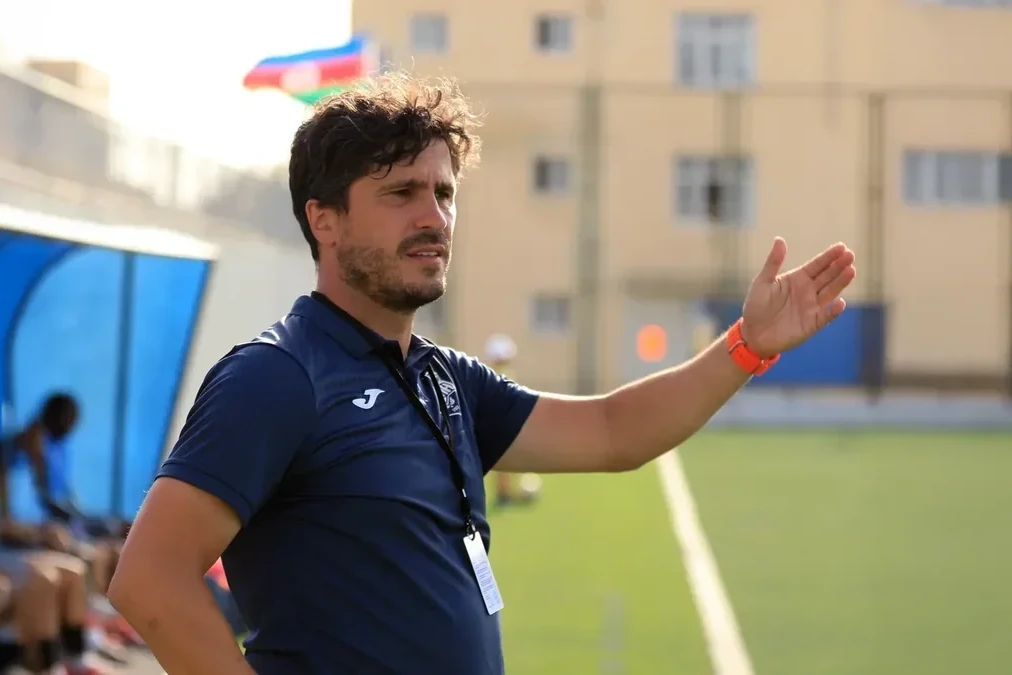

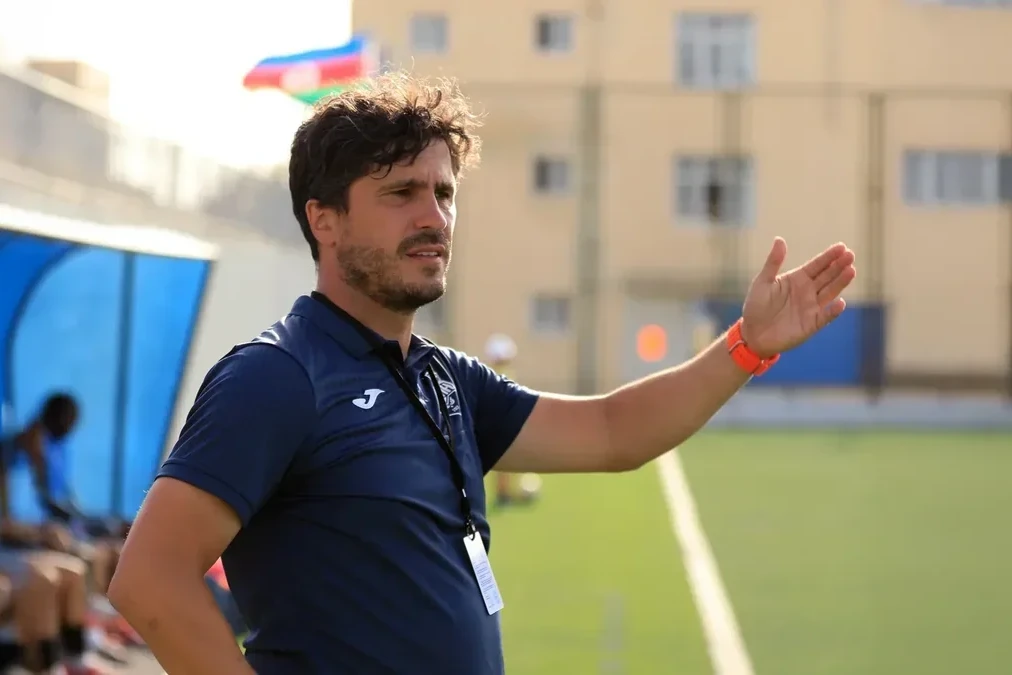
Adino Mustedanaqiç, head coach of Sabah's U-19 team, has spoken to Offsideplus.az about the shortcomings in Azerbaijani youth football and the UEFA Youth League.
– Do you feel the impact of tournaments like the UEFA Youth League on players?
– Yes, absolutely. These matches are the highest level of competition. As I always say, such games expose all your shortcomings and demand maximum performance from you.
– Are Azerbaijani footballers significantly behind their European peers?
– In fact, such games are necessary for development. It is important for your weaknesses to be exposed. At the same time, you must play with the highest intensity to remain competitive. I am confident that if Azerbaijani children had more opportunities to participate in such matches, their level of development would be significantly higher. Unfortunately, Azerbaijani youth football is quite isolated from Europe, as well as from high-level games and tournaments. I believe this is the main reason for their lag.
– How long do we need?
– As I said, I don’t think Azerbaijani talented footballers are behind their European peers up to the age of 13–14. Problems mainly arise during the development phase from 14 years old to the first team. Especially as the demands of the game increase, when team play is prioritised over individual skills, problems begin to emerge. That is, when players are required to transition from individual play to team play and act collectively, difficulties arise. I believe that the biggest issues for Azerbaijani footballers lie in this area. If I had to quantify how far behind they are from their European peers, I think this could be considered a certain indicator. I genuinely believe that from the age of 14, the problems for Azerbaijani footballers increase. As I mentioned, there are many reasons for this. But one of the main reasons is that they play in a somewhat isolated environment. They mainly compete against each other and do not have enough opportunities to test themselves at a higher level in international tournaments. I am referring to club level here. At the national team level, players gain some international match experience. However, national teams in other countries also train together relatively less. Therefore, this problem does not manifest as prominently at the national team level as it does at the club level.
– A brief question: Where should we start?
– Referring back to the previous questions, I believe that if work in this direction is better organised in Azerbaijani football, and if our teams have more opportunities to compete against such strong opponents in these tournaments, the gap will gradually decrease over the next 5–10 years. Because we need to start from the U-13 and U-14 age groups. The development path of footballers from this generation should resemble that of their European peers. They should also participate in high-intensity games and gain similar levels of international match experience. Only in this way can our footballers significantly reduce the gap with their counterparts in Europe.